
Solar Net-Metering Guidelines in Bangladesh 2026: SREDA Policy, Approval Steps & Factory Electricity Savings
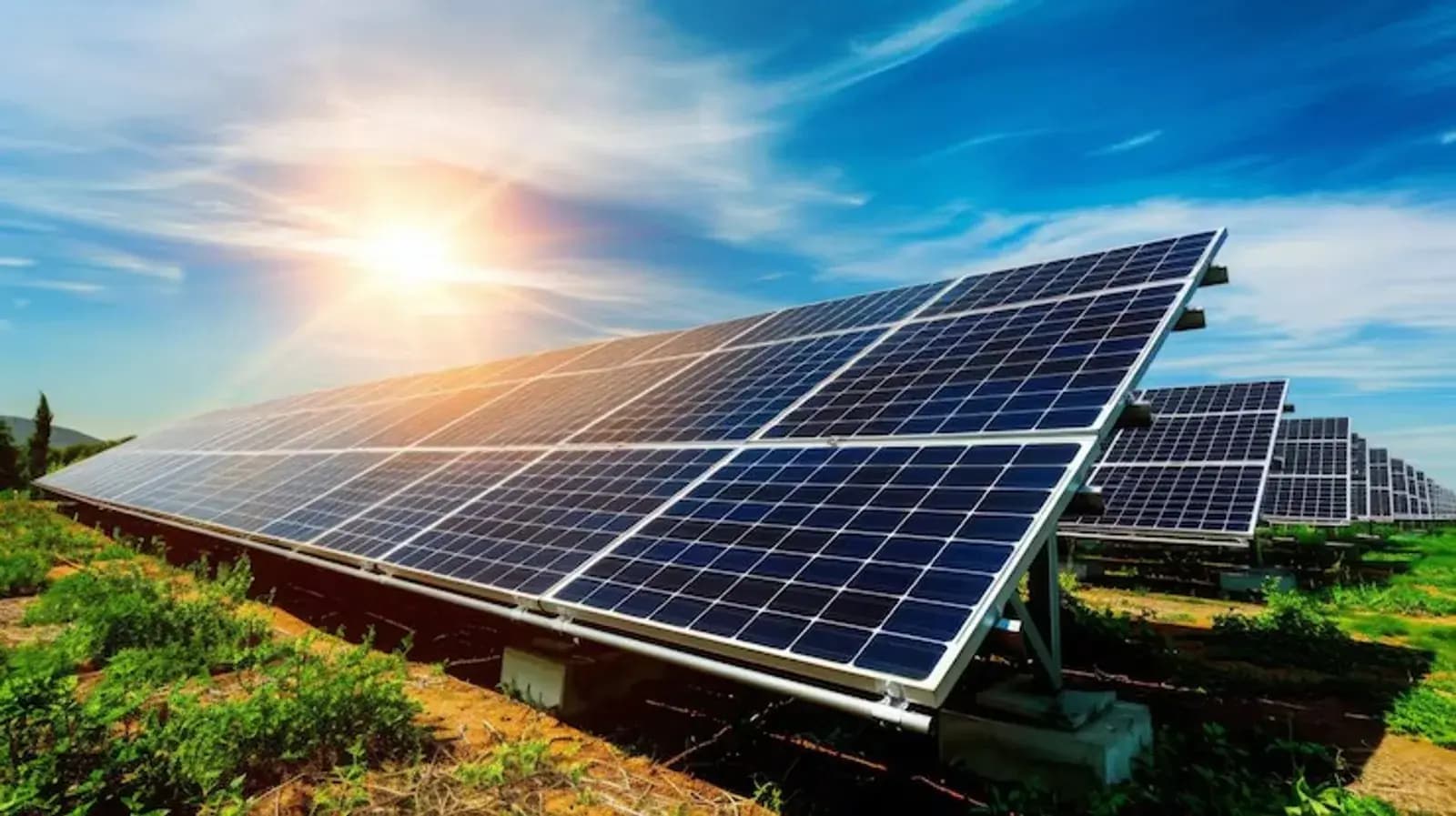
Solar Net-Metering Guidelines in Bangladesh 2026: SREDA Policy & Implementation
For commercial and industrial enterprises in Bangladesh, Solar Net-Metering is the single most transformative clean energy mechanism. Governed by the Sustainable and Renewable Energy Development Authority (SREDA) under the Ministry of Power, Energy and Mineral Resources, net-metering allows facilities to generate solar electricity on their rooftops, consume it locally, and export surplus energy back into the national grid for direct monetary billing credits.
Direct Answer (BLUF): What is Solar Net-Metering in Bangladesh?
Quick Summary: Solar Net-Metering in Bangladesh is a utility billing mechanism that allows 3-phase electricity consumers (commercial, industrial, educational, and residential) to install grid-tied solar systems and export surplus solar power to their local distribution utility (DESCO, DPDC, BREB, BPDB, WZPDCL, NESCO). The exported units (kWh) are deducted 1-to-1 from the imported grid units at the end of each billing cycle, cutting electricity bills by 40% to 70%.
1. Key Regulatory Provisions of the SREDA Net-Metering Policy
The SREDA Net-Metering Guidelines specify strict technical and operational conditions that every applicant must satisfy:
| Regulatory Parameter | SREDA Net-Metering Rule | Practical Engineering Impact |
|---|---|---|
| Capacity Cap | Up to 70% of Sanctioned Load | A factory with a 1,000 kW sanctioned load can install up to a 700 kWp solar system. |
| Grid Voltage Level | Low Voltage (400V 3-Phase) or Medium Voltage (11kV / 33kV) | Small systems connect at 400V; large industrial installations connect at 11kV substation busbars. |
| Power Factor | Minimum 0.95 (lagging) | Modern inverters must provide programmable active and reactive power factor control. |
| Anti-Islanding Protection | Mandatory disconnection within < 2.0 seconds of grid failure | Ensures utility line technician safety during scheduled power outages per IEEE 1547 / IEC 62116. |
| Total Harmonic Distortion (THD) | Current THD strictly < 5% | Preserves utility power quality and protects sensitive industrial machinery. |
| Credit Settlement | 1-to-1 kWh energy offsetting; rollover for up to 12 months | Excess credit rolled forward monthly; annual settlement of net surplus. |
2. Step-by-Step Net-Metering Application and Approval Workflow
Obtaining net-metering interconnection approval in Bangladesh requires navigating five defined stages:
Workflow Summary:
- Step 1: Technical Feasibility & Roof Structural Audit
- Step 2: Formal Application to Distribution Utility (DPDC/DESCO/BREB)
- Step 3: Verification & In-Principle Approval (LOI)
- Step 4: Procurement, Installation & Safety Pre-Commissioning
- Step 5: Joint Inspection, Bi-Directional Meter Installation & Commercial Operation
Detailed Breakdown of Each Step:
- Roof Structural & Electrical Load Audit: A structural engineer must certify that the factory shed (steel PEB or RCC roof) can support the dead load and wind load (minimum 15–20 kg/m²) of solar panels and HDG mounting structures.
- Application Submission: Submit the official SREDA Net-Metering application form to your respective utility sub-divisional office along with:
- Latest utility electricity bill copy and sanctioned load certificate.
- Single Line Diagram (SLD) of the proposed solar plant and interconnection point.
- Technical datasheets of Tier-1 solar modules and grid-tied inverters (confirming IEC 62109, IEC 61727, and IEC 62116 certifications).
- Utility Verification & Technical Clearance: Utility engineers review the distribution transformer capacity. The total cumulative solar capacity on a distribution transformer cannot exceed 50% of the transformer's rated capacity.
- Plant Installation: The EPC partner installs modules, string inverters, DC combiners, AC distribution boards (ACDB), and earthing systems with earth resistance < 1.0 Ohm.
- Joint Commissioning & Bi-Directional Metering: The utility replaces the existing unidirectional meter with a Class 0.2S or 0.5S Bi-Directional Smart Energy Meter that records forward (import) and reverse (export) active energy.
3. Financial Impact: Real-World Industrial Case Study
To understand the tangible economics of net-metering in Bangladesh, examine this operational case study from a garment manufacturing factory in Gazipur:
- Factory Sanctioned Load: 500 kW
- Installed Solar Rooftop Capacity: 350 kWp (70% maximum allowable)
- Total Initial Turnkey Capex: BDT 1,95,00,000 (BDT 1.95 Crore)
- Average Daily Generation: 1,365 kWh / day (3.9 Peak Sun Hours)
- Monthly Solar Generation: ~ 40,950 kWh / month
- Industrial Grid Electricity Tariff: BDT 13.80 per unit (kWh)
- Monthly Electricity Bill Reduction: $40,950 \times 13.80 = \mathbf{BDT \text{ } 5,65,110 \text{ / month}}$
- Annual Savings: $\mathbf{BDT \text{ } 67,81,320 \text{ / year}}$
- Simple Payback Period: $\frac{1,95,00,000}{67,81,320} = \mathbf{2.87 \text{ Years}}$
After less than 3 years, the entire capital expenditure is fully recovered, generating over BDT 67 Lakhs in annual net profit for the next 27+ years.
4. Technical Checklist for Inverter Selection under SREDA Rules
Under utility interconnection rules, string inverters must comply with the following technical parameters:
- Dual Independent MPPT Channels: Enables separate string tracking for east-west roof orientations.
- Integrated DC Disconnect Switch: Ensures safe mechanical disconnection for fire safety and maintenance.
- Type II Surge Arresters (DC & AC): Shields expensive inverter semiconductors from lightning surges common in Bangladesh.
- Remote Telemetry (RS485 / 4G): Enables real-time generation monitoring and compliance reporting to the SREDA National Renewable Energy Database.
5. Frequently Asked Questions (AEO / FAQ)
Q1: Can a residential consumer in Dhaka apply for solar net-metering?
Answer: Yes. Any consumer with a 3-phase electrical connection from DPDC or DESCO is eligible for solar net-metering up to 70% of their sanctioned load, provided they have legal roof ownership and technical clearance from the utility.
Q2: What happens to excess solar electricity generated on Fridays or factory holidays?
Answer: On weekends and holidays when factory machinery is offline, 100% of the generated solar energy is automatically exported to the national grid through the bi-directional meter. These exported units accumulate as credits on your monthly utility bill and are subtracted from your weekday grid electricity usage.
Q3: Does net-metering work during national grid power outages (load shedding)?
Answer: No, standard grid-tied on-grid solar systems automatically disconnect within 2 seconds during a power outage to prevent dangerous back-feeding into the grid (anti-islanding protection). If you require continuous power during load shedding, you must install an On-Grid Hybrid System paired with LiFePO4 battery storage or generator synchronization controllers.
Q4: How long does the SREDA net-metering approval process take?
Answer: From initial feasibility study to bi-directional meter energization, the standard timeline takes between 45 to 60 days, depending on transformer capacity availability at your local utility substation.
Need Commercial Equipment for Your Project?
Get manufacturer-direct wholesale pricing, complete compliance documentation, and Dhaka warehouse delivery lead times.