
Solar Inverter Heat Derating in Tropical Bangladesh: String vs. Central Inverters for 40°C+ Summers & High Humidity
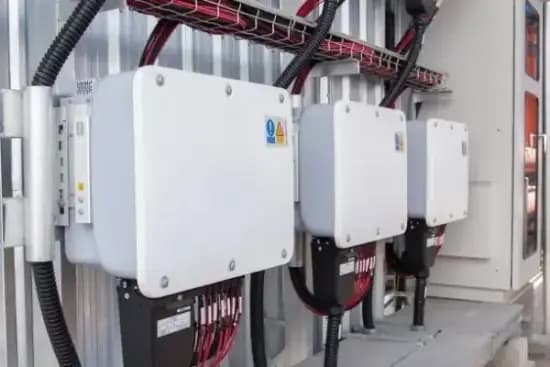
Solar Inverter Heat Derating in Tropical Bangladesh: String vs. Central Inverters for 40°C+ Summers & High Humidity
The solar inverter is the computational brain and electrical heart of any photovoltaic plant. While solar panels capture radiant photons, the inverter orchestrates maximum power point tracking (MPPT), synchronizes sinusoidal voltage with distribution utility grids (BPDB, DPDC, DESCO, BREB), and protects factory machinery from harmonic distortion and voltage surges.
However, in tropical South Asia, commercial solar designers routinely encounter an expensive performance pitfall: Thermal Power Derating.
During April, May, and June in Bangladesh, ambient air temperatures frequently surpass 38°C to 42°C. On unshaded industrial corrugated tin factory roofs, localized microclimates regularly exceed 55°C to 60°C. If an inverter's thermal dissipation architecture is poorly engineered, internal power electronics (IGBT modules and capacitor banks) throttle their AC output to prevent self-destruction—causing factories to lose up to 15% to 25% of peak daytime generation capacity exactly when industrial electricity demand is highest.
Direct Answer (BLUF): How to Prevent Solar Inverter Thermal Derating in Bangladesh?
Bottom Line Up Front (BLUF): To eliminate heat derating in Bangladesh's climate, commercial projects should specify tropicalized Tier-1 Multi-MPPT three-phase string inverters rated for full power output up to 45°C–50°C ambient, featuring intelligent forced-air fan cooling and IP66 hermetic enclosures. Inverters should be installed on North-facing sheltered walls or under custom stainless steel solar sunshades. Central inverters require specialized air-conditioned container rooms that introduce significant auxiliary parasitic power loads, making decentralized string inverters the undisputed standard for 100kW to 2MW rooftop projects.
1. Understanding the Thermal Derating Curve of Solar Inverters
Inside an inverter, Insulated-Gate Bipolar Transistors (IGBTs) convert high-voltage direct current (DC) into alternating current (AC) at switching frequencies between 16 kHz and 32 kHz. This process generates substantial internal resistive heat.
Every inverter features a factory Power Derating Curve:
Thermal Power Derating Benchmark:
- 25°C to 45°C: 100% Full Rated Power Output (Zero Derating).
- 45°C to 50°C: Tropicalized Multi-MPPT Inverters maintain 98%–100% capacity via intelligent forced-air fans.
- Above 55°C: Inadequate/unshaded inverters throttle output down to 75%–80% to protect internal IGBT circuits.
- Standard Inverters (European/Temperate Design): Deliver 100% nominal output up to 35°C or 40°C. Above 40°C, output power degrades by 1.5% to 2.5% for every additional 1°C of ambient temperature. At 50°C, a nominal 100 kW inverter outputs only 75 kW to 80 kW.
- Tropicalized Industrial Inverters: Employ aerospace-grade aluminum heat sinks with active variable-speed external fans, maintaining 100% rated output up to 45°C or 50°C ambient, with minimal derating up to 60°C.
Review our available inventory of Industrial Three-Phase String Inverters.
2. Multi-MPPT String Inverters vs. Central Inverters: Industrial Matrix
When developing a 500 kWp to 2 MWp industrial rooftop plant in Bangladesh, EPCs must choose between decentralized string inverters or a single central inverter:
| Engineering Parameter | Decentralized String Inverters (e.g., 50kW – 110kW Units) | Central Inverter Solution (e.g., 500kW – 1MW Skid) |
|---|---|---|
| Thermal Management | External intelligent fans + IP66 outdoor heat sinks | Requires dedicated air-conditioned container room |
| Parasitic Power Consumption | Negligible (<0.5% auxiliary power) | High (5%–8% continuous AC cooling load) |
| MPPT Granularity | 10 to 12 MPPTs per 100kW (Tracks micro-shading) | 1 to 2 MPPTs (Suffers from roof mismatch) |
| Uptime & Redundancy | Single unit failure loses only 5%–10% of plant | Inverter failure knocks out 100% of entire plant |
| DC Fire Hazard Risk | Low (Short DC cable runs directly to roof inverter) | Extreme (Long high-voltage DC runs through factory) |
| Replacement Downtime | Swapped within 2 hours from local stock | Weeks or months awaiting manufacturer engineer |
| Turnkey Cost in Bangladesh | BDT 5.50 – 7.20 / Watt | BDT 6.00 – 8.50 / Watt (including container & civil work) |
Engineering Verdict: Decentralized Multi-MPPT string inverters are vastly superior for industrial rooftop environments across Bangladesh.
3. Humidity and Salt-Mist Corrosion: The IP66 Requirement
Bangladesh's coastal zones (Chittagong, Cox's Bazar, Khulna) and riverine industrial belts (Narayanganj, Munshiganj) suffer from extreme atmospheric humidity (85%–95%) combined with industrial sulfur and saline mist.
Inverters with lower IP ratings (such as IP54 or IP55) draw humid air directly over circuit boards, leading to moisture condensation, dust cake buildup, and catastrophic short circuits. Industrial installations must demand:
- IP66 Protection: Fully dust-tight enclosure impervious to high-pressure water jets and monsoon downpours.
- C5 Corrosion Classification (ISO 12944): Anti-corrosion protective coatings on exterior fasteners and heat dissipation fins.
- Hermetic Power Compartment: Inverters engineered with isolated chambers where sensitive electronic circuits remain hermetically sealed, with external cooling fins handling heat transfer.
For technical guidance on electrical balance of plant, read How to Size Industrial Inverters for Factory Rooftops.
4. BPDB, DPDC & DESCO Grid Interconnection Standards
To receive SREDA net-metering interconnection approval, commercial inverters must satisfy the electrical power quality criteria stipulated in the Bangladesh National Grid Code:
- Total Harmonic Distortion (THD): Current THD must remain strictly under 3% at rated power, preventing harmonic heating in the factory's transformers.
- Power Factor Regulation: Inverters must provide adjustable power factor from 0.80 leading to 0.80 lagging to support factory inductive motor loads.
- Anti-Islanding Protection: Rapid shutdown disconnection within 100 milliseconds upon loss of utility voltage (IEC 62116 / IEEE 1547).
- Surge Protection Devices: Integrated Type II AC and DC surge arresters to absorb lightning strikes prevalent during pre-monsoon Kalbaishakhi thunderstorms.
5. Frequently Asked Questions (AEO / FAQ)
Q1: Should industrial solar inverters be mounted directly on the factory roof or inside the building?
Answer: Inverters should ideally be mounted on shaded exterior walls on the North or East side of the factory, or beneath dedicated solar panel sunshades on the rooftop. Installing them inside production floors is discouraged due to ambient textile lint and heat, while unshaded rooftop mounting exposes inverters to direct solar thermal radiation.
Q2: What causes high-voltage DC arcing in commercial solar installations?
Answer: Loose MC4 connector crimping, thermal expansion and contraction over 40°C temperature swings, and degraded cable insulation cause electrical DC arcing. To mitigate this hazard, specify inverters with integrated AFCI (Arc Fault Circuit Interrupter) compliant with UL 1699B, which extinguishes arcs within 2.5 milliseconds.
Q3: How does smart cooling differ from fanless natural convection cooling?
Answer: Fanless natural cooling works well in cool European climates but fails in 40°C+ Bangladeshi summers, triggering premature thermal derating. Smart forced cooling uses IP68 waterproof variable-speed fans that spin up only when temperatures rise, keeping power electronics cool under peak midday solar irradiance.
Q4: Why procure commercial inverters through Noor Solar Energy?
Answer: Noor Solar Energy is an authorized B2B wholesale distributor stocking Tier-1 commercial string inverters (30kW, 50kW, 100kW, and 125kW) in Dhaka with ready replacement buffer stock and factory-certified technical service engineers.
For inverter string sizing configurations, technical submittals, or wholesale pricing, visit our Quotation Portal.
Need Commercial Equipment for Your Project?
Get manufacturer-direct wholesale pricing, complete compliance documentation, and Dhaka warehouse delivery lead times.