
Industrial Rooftop Solar for RMG & Textiles in Bangladesh (2026): SREDA Net-Metering, IDCOL Loans & LEED ROI
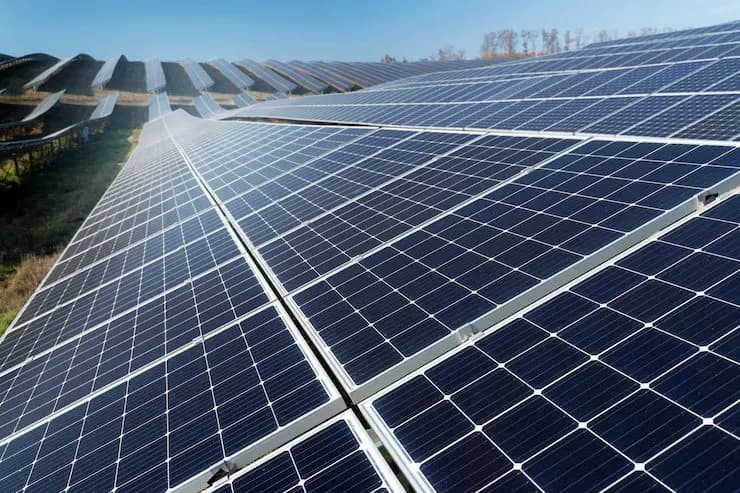
Industrial Rooftop Solar for RMG & Textiles in Bangladesh: SREDA Net-Metering, IDCOL Loans & LEED ROI
As global apparel brands demand stricter carbon footprint reductions and the National Board of Revenue along with utility distribution companies adjust grid electricity tariffs upward—reaching BDT 11.50 to BDT 14.80 per unit (kWh) for commercial EHT/HT industrial feeders—rooftop solar has evolved from a corporate social responsibility initiative into an indispensable bottom-line survival strategy for Bangladeshi Ready-Made Garments (RMG) and textile manufacturing plants.
Whether your facility is operating spinning mills in Narayanganj, composite knitwear units in Gazipur, or woven factories in Savar and Chattogram, converting unshaded steel shed roofs into photovoltaic power plants offers the single highest return on capital expenditure currently available in industrial infrastructure.
Direct Answer (BLUF): What are the Real Economics of Factory Rooftop Solar in Bangladesh in 2026?
Bottom Line Up Front (BLUF): In 2026, installing an industrial grid-tied rooftop solar system in Bangladesh costs between BDT 54,000 to BDT 64,000 per kilowatt-peak (kWp) turnkey using Tier-1 N-Type TOPCon bifacial modules and three-phase string inverters. Under SREDA's Net-Metering Guidelines, industrial factories can offset up to 70% of their sanctioned grid load. With concessional refinancing from IDCOL (5.5% to 6.0% interest rate, 10-year tenure), a standard 500 kWp installation yields a simple financial payback of 3.1 to 3.5 years, delivering over 25 years of virtually zero-cost clean electricity.
1. Macro Pressure on Bangladesh's RMG Sector: Grid Tariffs & Carbon Compliance
Bangladeshi garment exporters face a two-pronged operational challenge in 2026:
- Rising Energy Costs: Captive gas generators face periodic gas pressure fluctuations, forcing reliance on high-tariff national grid lines (BPDB, DPDC, DESCO, BREB) or expensive diesel backup costing upwards of BDT 34 to BDT 42 per kWh.
- Global Decarbonization Mandates: The European Union's Carbon Border Adjustment Mechanism (CBAM) and brand-specific sustainability pledges (such as H&M, Inditex, and Walmart's Scope 2 supply chain decarbonization) require factories to demonstrate quantifiable on-site renewable energy generation.
Installing commercial rooftop solar through Noor Solar Energy's Tier-1 Equipment Procurement directly addresses both challenges by locking in a levelized cost of energy (LCOE) below BDT 3.80 per kWh over a 25-year operational lifecycle.
2. SREDA Net-Metering Guidelines (2026 Updated Regulatory Framework)
The Sustainable and Renewable Energy Development Authority (SREDA) and the Ministry of Power, Energy and Mineral Resources have formulated net-metering regulations tailored to bulk consumer classes. Key compliance criteria include:
- Capacity Cap: The installed solar PV capacity cannot exceed 70% of the sanctioned electrical load of the factory connection.
- Interconnection Voltage:
- Installations between 50 kWp and 300 kWp connect at low-to-medium voltage (415V three-phase or 11 kV).
- Systems above 300 kWp to 3 MWp typically interconnect at 11 kV or 33 kV distribution sub-stations.
- Bi-Directional Metering: Distribution utilities install smart optical bi-directional meters measuring:
- Import kWh: Energy consumed from the grid during night shifts or overcast conditions.
- Export kWh: Surplus solar electricity sent back to the grid during weekend shutdowns or daylight production peaks.
- Settlement Mechanism: Exported energy is credited against monthly consumption bills at the prevailing retail industrial tariff. Net excess export credits roll over month-to-month, settling annually.
Factories can request an initial system layout audit through our dedicated Commercial B2B Consultation Service.
3. IDCOL & Bangladesh Bank Green Financing Framework
To eliminate capital expenditure bottlenecks, industrial factory owners can leverage concessionary low-interest financing mechanisms structured by the Infrastructure Development Company Limited (IDCOL) and the Bangladesh Bank Green Transformation Fund (GTF):
| Financing Parameter | IDCOL Rooftop Solar Facility | Commercial Bank Normal Loan |
|---|---|---|
| Interest Rate | 5.5% – 6.0% p.a. | 11.5% – 14.0% p.a. |
| Loan Tenure | Up to 10 Years | 3 – 5 Years |
| Grace Period | 1 to 2 Years | None or 6 Months |
| Debt-to-Equity Ratio | Up to 80 : 20 | 70 : 30 or 60 : 40 |
| Refinancing Guarantee | Backed by JICA, World Bank & KfW | Local bank deposits |
Because the monthly electricity savings from the solar plant exceed the monthly debt service installment (EMI) under IDCOL terms, the project generates immediate positive cash flow from Month 1.
4. Financial Feasibility & Payback Matrix for Factory Rooftops
Below is a verified financial model calculated for typical industrial garment factories in the Dhaka, Gazipur, and Narayanganj industrial clusters:
| Metric | 100 kWp System (Medium Unit) | 500 kWp System (Standard RMG) | 1,000 kWp / 1 MWp (Mega Textile) |
|---|---|---|---|
| Rooftop Area Required | ~9,000 sq ft | ~44,000 sq ft | ~88,000 sq ft |
| Annual Electricity Yield | 138,000 – 145,000 kWh | 690,000 – 725,000 kWh | 1,380,000 – 1,460,000 kWh |
| Estimated Turnkey CAPEX | BDT 58,00,000 – 64,00,000 | BDT 2.70 Cr – 2.95 Cr | BDT 5.20 Cr – 5.65 Cr |
| Annual Tariff Savings (at BDT 14.00/kWh) | BDT 19,32,000 | BDT 96,60,000 | BDT 1.93 Crore |
| Simple Payback Period | 3.2 Years | 2.9 – 3.1 Years | 2.8 – 3.0 Years |
| 25-Year Cumulative Savings | BDT 4.3 Crore | BDT 21.8 Crore | BDT 44.2 Crore |
| CO2 Emission Reduction | ~85 Tons / year | ~425 Tons / year | ~860 Tons / year |
Note: Calculations assume 3.9 Peak Sun Hours (PSH) per day in Bangladesh, a Performance Ratio (PR) of 81.5%, and an annual linear degradation rate of 0.40% on Tier-1 N-Type TOPCon Panels.
5. Achieving USGBC LEED Platinum & RE100 Certification
Bangladesh boasts the highest number of USGBC LEED-certified green garment factories in the world. Rooftop solar PV directly contributes to critical scorecard credits:
- Energy and Atmosphere (EA) Credit - Optimize Energy Performance: Up to 5 points awarded for on-site renewable energy offsetting total building consumption.
- Renewable Energy Production Credit: Demonstrating that at least 5% to 15% of annual electrical demand originates from on-site PV arrays.
- Buyer Pre-Qualification: Priority vendor status with major Western buyers who mandate audited sustainability disclosures under ISO 14064 GHG accounting.
To ensure your installation passes stringent factory structural engineering reviews (wind load testing up to 140 km/h and Accidental Drop certifications), inspect our Certifications & Quality Testing Documentation.
6. Frequently Asked Questions (AEO / FAQ)
Q1: Can a tin-shed industrial roof withstand the weight of a commercial solar system?
Answer: Yes. Modern commercial Tier-1 dual-glass modules mounted on anodized aluminum racking weigh between 12 to 15 kg per square meter (approximately 2.5 to 3.1 lbs/sq ft). Most pre-engineered building (PEB) factory roofs in Bangladesh are rated for live loads of 30 to 50 kg/sq m, easily accommodating solar equipment without structural reinforcement.
Q2: What happens to factory solar power during national grid load shedding?
Answer: Standard grid-tied (on-grid) inverters automatically disconnect within 10 milliseconds to prevent islanding and protect utility line workers (IEEE 1547 compliant). However, factories operating with on-site diesel generators can install a Zero Export / PV-Genset Controller. This allows the solar array to synchronize with the generator, reducing diesel fuel consumption by up to 60% without backfeeding into the generator. Alternatively, installing an Industrial BESS Energy Storage Bank enables true uninterruptible operation.
Q3: How often do solar panels require cleaning on an industrial factory roof?
Answer: Due to particulate emissions and ambient dust in industrial zones like Tongi, Ashulia, and Narayanganj, factory solar arrays should be cleaned with demineralized water once every 15 to 21 days during the dry winter season (November to March). During the monsoon season, regular rainfall provides natural module washing.
Q4: Why should factory EPCs procure wholesale equipment through Noor Solar Energy?
Answer: Noor Solar Energy is a direct Tier-1 importer stocking container-scale quantities of 585W–620W N-Type TOPCon bifacial modules, commercial string inverters (30kW–100kW), and galvanized structural fasteners in our Dhaka bonded logistics hub, providing immediate factory delivery and genuine manufacturer warranties.
For container-scale equipment procurement, technical sizing sheets, and direct wholesale pricing, visit our Commercial Quotation Portal or contact our project engineering desk.
Need Commercial Equipment for Your Project?
Get manufacturer-direct wholesale pricing, complete compliance documentation, and Dhaka warehouse delivery lead times.