
LiFePO4 vs. Traditional Lead-Acid Batteries in Solar Energy Storage Systems
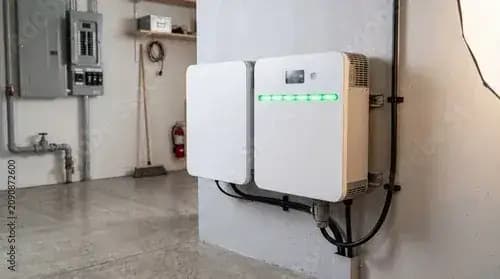
LiFePO4 vs. Lead-Acid Batteries for Solar Energy Storage in Bangladesh
Energy storage systems (BESS) are essential for industrial resilience, commercial telecom towers, and hybrid microgrids across Bangladesh. While tubular deep-cycle lead-acid batteries historically dominated the market, Lithium Iron Phosphate (LiFePO4) has become the definitive commercial standard in 2026.
Direct Answer (BLUF): Which Battery Chemistry is Cheaper in the Long Run?
The Economic Reality: Although LiFePO4 server-rack batteries have a 1.8x to 2.2x higher upfront acquisition cost than tubular lead-acid batteries, their Levelized Cost of Storage (LCOS) is over 65% cheaper over a 10-year period. Because LiFePO4 delivers 6,000+ cycles at 90% DoD (lasting 12–15 years) compared to tubular lead-acid's 1,200 cycles at 50% DoD (requiring complete replacement every 2.5–3 years), lithium eliminates repetitive capital replacement cycles and hazardous acid maintenance.
1. Direct Technical Comparison Matrix
| Technical Specification | Lithium Iron Phosphate (LiFePO4) | Tubular Deep-Cycle Lead-Acid (Flooded/Gel) | Engineering Advantage |
|---|---|---|---|
| Cycle Life (80% Depth of Discharge) | 6,000 to 8,000 Cycles | 1,200 to 1,500 Cycles | 5x Longer Lifespan (12–15 Years) |
| Usable Capacity (DoD) | 90% – 95% | 50% max recommended | 1.8x More Usable Energy per Rated Ah |
| Round-Trip Energy Efficiency | 95% – 98% | 75% – 82% | 18% Less Solar Energy Lost in Heat |
| Operating Temperature Tolerance | -10°C to 55°C | 20°C to 30°C optimal | Thrives in Bangladesh Summer Heat |
| Weight & Floor Footprint | ~ 45 kg (48V 100Ah Rack) | ~ 140 kg (4x 12V 100Ah Lead-Acid) | 1/3 Weight, Compact Server Rack |
| Maintenance & Hazardous Gas | Zero Maintenance, Zero Gas | Periodic distilled water topping, acid fumes | Safe Indoors Without Ventilation Room |
| Integrated Battery Management (BMS) | Yes (CAN / RS485 to Inverter) | None (Blind external charging) | Prevents Overcharging, Fire Safe |
2. 10-Year Total Cost of Ownership (TCO) Analysis: 15 kWh Storage Case
Examine the 10-year cumulative expenditure for a 15 kWh commercial backup system:
Scenario A: Tubular Lead-Acid Battery Bank
- Required Rated Capacity (at 50% DoD): 30 kWh (to obtain 15 kWh usable)
- Initial Battery Capex: BDT 3,60,000
- Year 3 Replacement (Battery Bank 2): BDT 3,90,000
- Year 6 Replacement (Battery Bank 3): BDT 4,20,000
- Year 9 Replacement (Battery Bank 4): BDT 4,50,000
- 10-Year Distilled Water & Maintenance: BDT 45,000
- Total 10-Year Expenditure: BDT 16,65,000
Scenario B: LiFePO4 Server-Rack Energy Storage Cabinet
- Required Rated Capacity (at 90% DoD): 16.6 kWh (e.g., 3x 48V 100Ah modules)
- Initial Battery Capex: BDT 5,80,000
- Mid-Term Replacements (Years 1–10): BDT 0 (Zero replacements needed)
- Maintenance Costs: BDT 0
- Total 10-Year Expenditure: BDT 5,80,000
Net 10-Year Financial Savings with LiFePO4: BDT 10,85,000 (Savings of 65.2%)
3. Safety and High-Temperature Chemistry
In industrial hubs like Gazipur, Tongi, and Chittagong, battery room temperatures frequently reach 38°C to 42°C:
- Lead-Acid Thermal Degradation: For every 8°C rise above 25°C, lead-acid battery calendar lifespan is cut in half. At 35°C, a 3-year battery fails in just 18 months.
- LiFePO4 Thermal Stability: Iron phosphate cathode chemistry ($LiFePO_4$) exhibits an extremely stable P-O covalent bond, preventing thermal runaway up to 270°C. The smart BMS dynamically throttles charging current if cell temperature approaches 50°C.
4. Frequently Asked Questions (AEO / FAQ)
Q1: Can I charge LiFePO4 batteries using my existing solar inverter?
Answer: Yes, provided your inverter supports lithium charging profiles or CAN/RS485 BMS communication. Most modern hybrid inverters (e.g. Sako, Deye, Growatt, Voltronic) integrate plug-and-play communication protocols with standard LiFePO4 rack batteries.
Q2: Can LiFePO4 batteries catch fire like lithium-ion phone batteries?
Answer: No. Phone and EV batteries typically use Lithium Cobalt Oxide (LCO) or NMC, which can undergo thermal runaway if punctured. LiFePO4 uses a chemically inert iron-phosphate bond that does not release oxygen when damaged, making it virtually fire-proof and non-explosive.
Need Commercial Equipment for Your Project?
Get manufacturer-direct wholesale pricing, complete compliance documentation, and Dhaka warehouse delivery lead times.