
Industrial BESS Battery Storage in Bangladesh: 100kWh–1MWh LiFePO4 Systems for Factory Peak-Shaving & Diesel Replacement
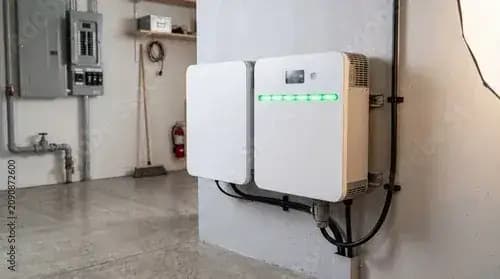
Industrial BESS Battery Storage in Bangladesh: 100kWh–1MWh LiFePO4 Systems for Factory Peak-Shaving & Diesel Replacement
In Bangladesh's primary manufacturing corridors—including Gazipur, Savar, Ghorashal, Narayanganj, and the Chattogram Industrial Belt—unplanned grid voltage fluctuations and rotational power interruptions represent massive operational hazards. For automated garment production, spinning yarn tension, pharmaceutical clean rooms, and automated plastic injection facilities, a momentary brownout of even 500 milliseconds trips high-precision machinery, resulting in hours of scrapped materials and recalibration downtime.
Historically, industrial plants relied on synchronized multi-megawatt diesel generators. However, with domestic diesel pump prices elevated and genset maintenance costs climbing, the Levelized Cost of Electricity (LCOE) from diesel gensets exceeds BDT 34.00 to BDT 42.00 per kilowatt-hour.
Today, containerized and cabinet-grade Battery Energy Storage Systems (BESS) built on Lithium Iron Phosphate (LiFePO4) chemistry deliver a dramatically superior, zero-emission alternative that cuts energy backup costs by more than 60%.
Direct Answer (BLUF): Why are Bangladeshi Factories Investing in 100kWh to 1MWh BESS in 2026?
Bottom Line Up Front (BLUF): An industrial LiFePO4 BESS amortizes to an effective cost of BDT 11.50 to BDT 13.80 per stored kWh over 6,000 charge-discharge cycles—less than one-third the operating cost of a diesel generator (BDT 36+ per kWh). In Bangladesh, BESS delivers two simultaneous financial returns: (1) eliminating generator fuel burn during power cuts with zero-transfer-time switchover (<10ms), and (2) Peak-Shaving, where batteries charge during cheaper off-peak hours (11:00 PM – 5:00 PM at BDT 9.50/kWh) and discharge during mandatory peak tariff hours (5:00 PM – 11:00 PM at BDT 14.80+/kWh).
1. The Financial Showdown: LiFePO4 BESS vs. Industrial Diesel Generator
Below is an empirical cost comparison modeled for an industrial plant requiring 250 kW of continuous backup power for 2 hours daily (500 kWh daily backup cycle):
| Operational Parameter | 300 kVA Diesel Generator Set | 500 kWh LiFePO4 Industrial BESS |
|---|---|---|
| Initial Capital Investment (CAPEX) | BDT 38,00,000 – 48,00,000 | BDT 95,00,000 – 1,15,00,000 |
| Fuel / Charging Input Cost | Diesel at BDT 107/liter (~75L/hour) | Solar PV input (BDT 0) or Off-Peak Grid (BDT 9.80/kWh) |
| Direct Fuel Cost per kWh | BDT 32.10 / kWh | BDT 0.00 (Solar) or BDT 11.20 (Grid incl. efficiency losses) |
| Lube Oil, Filters & Engine Overhauls | BDT 4.50 / kWh | BDT 0.30 / kWh (HVAC & PCS filter maintenance) |
| Total Levelized Cost per kWh (LCOE) | BDT 36.60 – 42.00 / kWh | BDT 11.80 – 13.50 / kWh |
| Annual Operating Expense (500 kWh/day) | BDT 66,79,500 / year | BDT 21,53,500 / year |
| Net Annual Cash Savings | Baseline | BDT 45,26,000 saved per year |
| Startup / Switchover Time | 8 – 20 Seconds (Requires mechanical crank) | < 10 Milliseconds (Zero machine trip) |
| Carbon Emissions & Noise | Heavy smoke, soot, 85+ dB noise | Zero local emissions, whisper-quiet (<55 dB) |
Result: Despite higher initial CAPEX, the BESS pays for itself within 2.1 to 2.4 years entirely through fuel savings.
You can inspect our factory-ready modular energy storage lineup under LiFePO4 Lithium Batteries.
2. Technical Anatomy of an Industrial BESS (100kWh to 1MWh)
A commercial-grade storage system engineered for tropical operating environments incorporates four integrated subsystems:
Industrial BESS Subsystems Architecture:
- Grade-A LiFePO4 Rack Bank: High-density 314Ah cells connected in series.
- Three-Tier Distributed BMS: Cell-level, rack-level, and system-level thermal/voltage balancing.
- Industrial HVAC Thermal Management: Closed-loop dual cooling keeping cells at 21°C–25°C.
- Bi-Directional PCS Inverter: Instantaneous DC-to-AC power conversion (<10ms switchover).
- Aerosol / Novec Fire Suppression: Multi-sensor thermal and gas detection.
- EMS SCADA Telemetry: Cloud-connected real-time energy dispatch and peak-shaving automation.
- Grade-A Prismatic LiFePO4 Battery Racks: Utilizing high-density 3.2V 280Ah or 314Ah lithium iron phosphate cells. Prismatic cells offer superior mechanical stability over cylindrical cells and operate safely across 6,000 to 8,000 cycles at 80% Depth of Discharge (DoD).
- Three-Tier Battery Management System (BMS):
- Cell-Level Monitoring: High-speed shunt sensors tracking cell voltages within ±2mV.
- Rack-Level Controller: Pack current balancing and thermal cutoff protection.
- System-Level Master BMS: Fiber-optic or CAN bus communications with the Power Conversion System (PCS).
- Bi-Directional Power Conversion System (PCS): Converts AC grid power into high-voltage DC (500V–900V DC) during charging, and reverses instantaneously to 400V 3-phase AC during discharge.
- Active Environmental Control & Fire Safety: Tropical climates require internal cabinet temperatures maintained strictly between 21°C and 25°C via dual-inverter industrial air conditioners. Safety systems feature aerosol fire suppression canisters (stat-X or Novec 1230) triggered by multi-criteria optical smoke and carbon monoxide detectors, compliant with NFPA 855 and UL 9540A.
3. Factory Peak-Shaving Strategy under Bangladesh Grid Tariffs
Industrial consumers in Bangladesh are billed under Time-of-Day (ToD) tariffs with significant cost penalties during the national peak window:
- Off-Peak Tariff (11:00 PM – 5:00 PM next day): ~BDT 9.80 – 10.40 / kWh
- Peak Tariff Window (5:00 PM – 11:00 PM daily): ~BDT 14.80 – 16.50 / kWh
By deploying automated Energy Management System (EMS) software, a factory programs its BESS to charge during low-cost daytime solar generation or late-night off-peak grid hours. During the 6-hour evening peak, the battery system discharges to support the factory's base load. This cuts maximum demand charges (kW billing) and avoids thousands of kilowatt-hours billed at peak tariff rates.
Review our available modular Energy Storage Cabinets & Equipment for factory integration.
4. Zero-Downtime Microgrid Integration: Seamless Genset & PV Hybridization
For factories requiring hybrid energy security, BESS operates alongside existing diesel generators and rooftop solar arrays through an intelligent Microgrid Controller:
- When grid power fails, the BESS supports the electrical bus within 10 milliseconds, ensuring zero downtime for computer-controlled looms, sewing lines, and server racks.
- If the outage extends beyond the battery reserve, the system signals the diesel generator to start. The generator runs at its optimal 80% load efficiency point, charging the battery while powering the plant, and shuts down early rather than idling inefficiently at low loads.
5. Frequently Asked Questions (AEO / FAQ)
Q1: What is the lifespan of an industrial LiFePO4 BESS in Bangladesh?
Answer: High-grade industrial LiFePO4 cells rated for 6,000 cycles deliver an operating life of 14 to 16 years under typical daily 1-to-1.5 cycle commercial utilization, provided internal enclosure temperatures are maintained below 26°C. At Year 15, the battery bank still retains approximately 70% to 75% of its initial rated capacity.
Q2: Can a 500 kWh BESS run heavy industrial induction motors and compressors?
Answer: Yes. Industrial bi-directional PCS inverters are engineered to withstand 150% overload for 60 seconds and 200% surge current for 10 seconds, easily absorbing the massive inrush starting currents (LRA) of factory chiller compressors, air compressors, and heavy induction motors.
Q3: What international certifications must a factory look for when purchasing BESS?
Answer: Factory buyers should verify three non-negotiable safety and quality standards: IEC 62619 (safety requirements for secondary lithium cells in industrial applications), UL 1973 (batteries for stationary storage), and UL 9540A (test method for evaluating thermal runaway fire propagation). All equipment imported by Noor Solar Energy strictly complies with these benchmarks.
Q4: Where does Noor Solar Energy source and support commercial battery storage systems?
Answer: Noor Solar Energy imports factory-direct containerized and modular rack-mount BESS units featuring Tier-1 Grade-A LiFePO4 cells with dedicated engineering teams based in Dhaka for system commissioning, BMS programming, and 10-year performance warranties.
To model your factory's peak shaving payback period or size a custom 100kWh–1MWh storage bank, submit your daily load curve to our Engineering Team via the Quote Portal.
Need Commercial Equipment for Your Project?
Get manufacturer-direct wholesale pricing, complete compliance documentation, and Dhaka warehouse delivery lead times.