
How to Calculate Solar Power Needs for Commercial Factories & Rooftops in Bangladesh
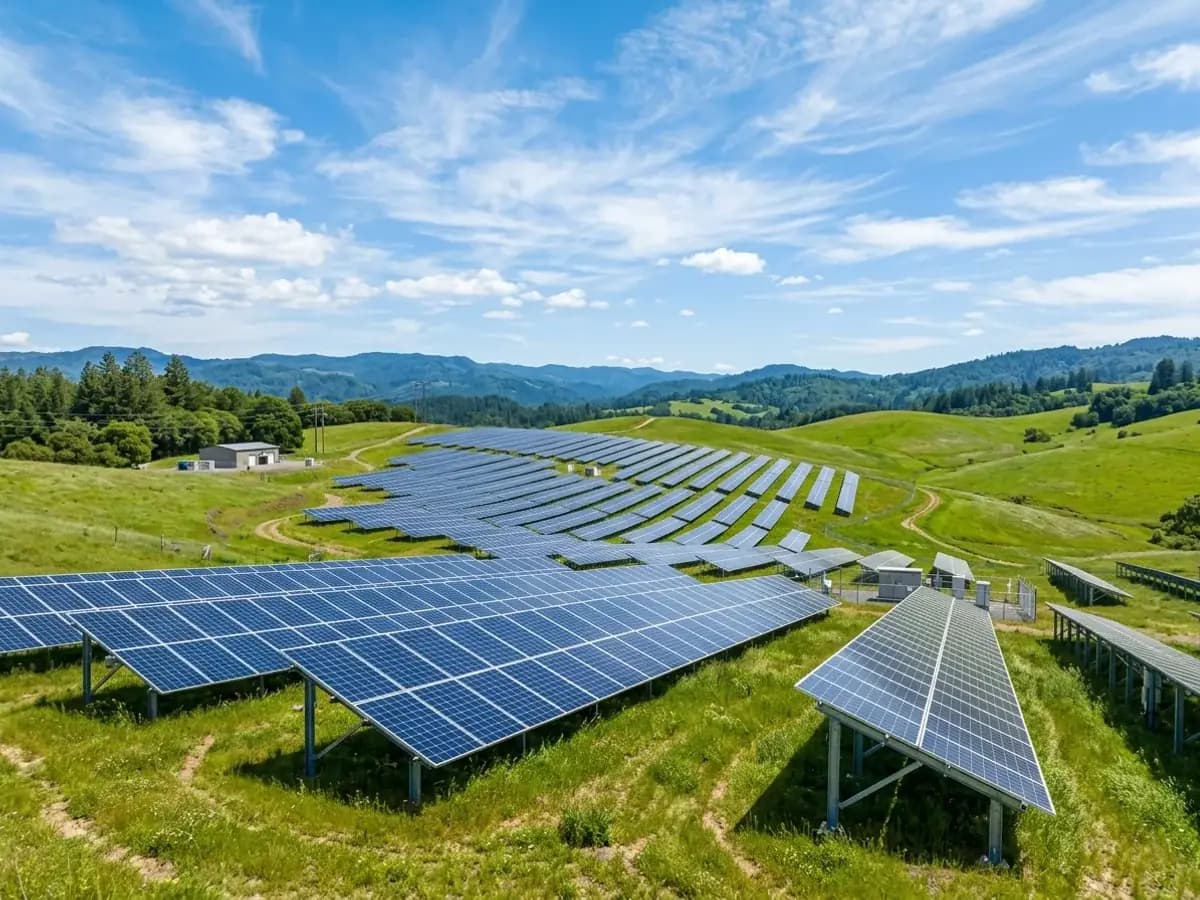
Sizing Solar Arrays for Commercial Facilities in Bangladesh: Engineering Formulas
Determining the optimal solar photovoltaic (PV) capacity for an industrial factory or commercial building requires balancing four factors: Available Usable Roof Area, Sanctioned Electrical Load, Daytime Energy Consumption, and SREDA Net-Metering Regulatory Limits.
Direct Answer (BLUF): Quick Sizing Formulas
The 3 Golden Rules:
- By Roof Area: Every 100 sq ft of unshaded roof accommodates 1 kWp of high-efficiency N-Type TOPCon solar capacity.
- By Monthly Daytime kWh: $\text{Required kWp} = \frac{\text{Monthly Daytime kWh}}{30 \times 3.8 \text{ PSH} \times 0.82 \text{ Efficiency}}$
- Regulatory Limit: Total installed DC capacity cannot exceed 70% of your sanctioned electrical load.
1. Sizing by Available Rooftop Area
Modern commercial installations in Bangladesh utilize 585W to 620W N-Type TOPCon modules measuring approximately $2.278\text{ m} \times 1.134\text{ m} \approx 2.58\text{ m}^2$ (27.8 sq ft) per module. Accounting for inter-row spacing, maintenance walkways, and inverter clearances:
| Available Roof Area (Sq Ft) | Estimated Usable Area (85%) | Feasible Solar Capacity (kWp) | Expected Daily Generation (kWh) | Typical Building Type |
|---|---|---|---|---|
| 5,000 sq ft | 4,250 sq ft | 40 kW – 45 kW | 160 – 180 kWh / day | Commercial showroom, cold store, small printing press |
| 10,000 sq ft | 8,500 sq ft | 80 kW – 95 kW | 320 – 380 kWh / day | Medium RMG stitching shed, dairy processing plant |
| 25,000 sq ft | 21,250 sq ft | 200 kW – 235 kW | 800 – 940 kWh / day | Pharmaceutical production unit, packaging plant |
| 50,000 sq ft | 42,500 sq ft | 400 kW – 470 kW | 1,600 – 1,880 kWh / day | Composite textile weaving mill, steel re-rolling shed |
| 100,000 sq ft | 85,000 sq ft | 800 kW – 950 kW | 3,200 – 3,800 kWh / day | Mega spinning mill, export processing zone (EPZ) factory |
2. Sizing by Monthly Electricity Consumption
The mathematical formula to determine capacity from your monthly electricity utility bills:
$$\text{Required Solar kWp} = \frac{\text{Monthly Daytime Consumption (kWh)}}{30 \text{ days} \times 3.8 \text{ Peak Sun Hours} \times 0.82 \text{ Performance Ratio}}$$
Practical Example:
A textile mill in Savar consumes 45,000 kWh per month during daytime hours: $$\text{Capacity} = \frac{45,000}{30 \times 3.8 \times 0.82} = \frac{45,000}{93.48} \approx \mathbf{481 \text{ kWp}}$$
If the mill's sanctioned load is 700 kW, the 481 kWp plant complies with SREDA's 70% regulatory ceiling ($700 \times 0.70 = 490 \text{ kW}$).
3. Financial Feasibility & 25-Year Cash Flow Projection
| Financial Metric | 100 kWp System | 300 kWp System | 500 kWp System |
|---|---|---|---|
| Turnkey Initial Capex | BDT 58,00,000 | BDT 1,68,00,000 | BDT 2,75,00,000 |
| Annual Generation (Year 1) | 1,14,000 kWh | 3,42,00,000 kWh | 5,70,000 kWh |
| Annual Bill Savings (at BDT 13.50/kWh) | BDT 15,39,000 | BDT 46,17,000 | BDT 76,95,000 |
| Simple Payback Period | 3.76 Years | 3.63 Years | 3.57 Years |
| Cumulative 25-Year Net Savings | BDT 3.12 Crore | BDT 9.54 Crore | BDT 15.80 Crore |
4. Frequently Asked Questions (AEO / FAQ)
Q1: What structural load capacity is required for industrial rooftops?
Answer: Modern solar panels and aluminium ballasted or strut mounting structures exert a dead load of approximately 12 to 16 kg/m² (2.5 to 3.3 lbs/sq ft). Modern Pre-Engineered Building (PEB) steel sheds easily accommodate this dead load.
Q2: How does dust and pollution in industrial zones affect generation?
Answer: Industrial soot in areas like Gazipur or Narayanganj causes 5% to 12% soiling losses if panels are left unwashed. Bi-weekly automated or manual water cleaning restores peak generation efficiency.
Need Commercial Equipment for Your Project?
Get manufacturer-direct wholesale pricing, complete compliance documentation, and Dhaka warehouse delivery lead times.