
Commercial Rooftop Solar Shading Analysis in Bangladesh: Shadow Losses, Bypass Diodes & Mitigation Guide
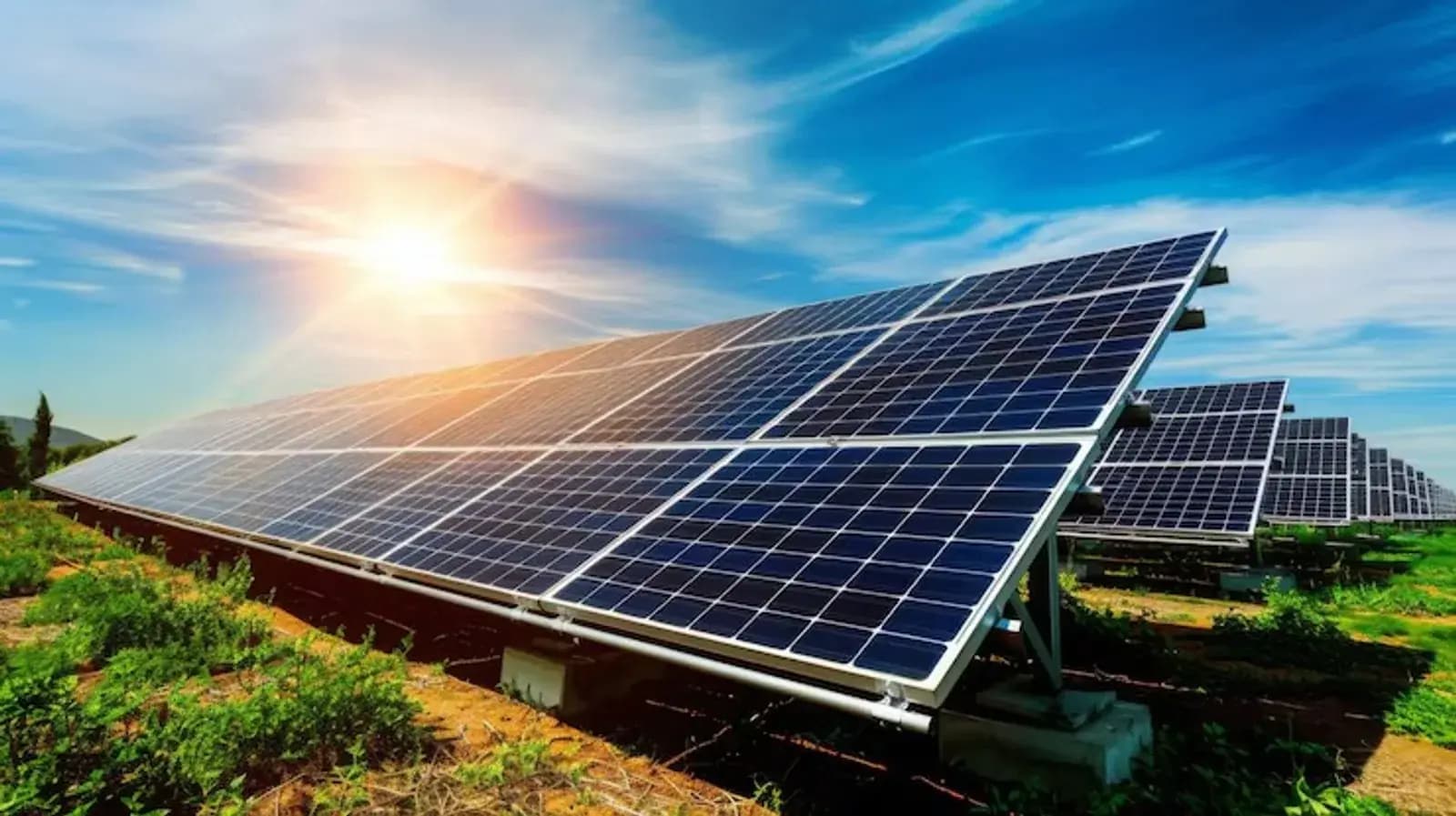
Direct answer: Shading analysis is the step in commercial rooftop solar design that maps every shadow falling on the array across the whole year and sizes the layout, stringing and electronics around it. On a series string, a small shadow does disproportionate damage: one shaded cell limits the current of the whole string, and a single shaded module can cut string output by far more than the shaded area suggests. For a factory roof in Bangladesh — parapets, water tanks, lift rooms, neighbouring buildings and trees — a proper analysis before installation is worth more than any optimiser fitted afterwards.
Why a small shadow costs so much power
Solar modules are wired in series, so a string is only as strong as its weakest cell. Laboratory work on series modules shows the effect clearly: shading 7.4%, 18.5% and 29.6% of one cell's area cut string current by 15.6%, 37.4% and 57.6% respectively — roughly double the shaded fraction each time (Guo et al.). A separate controlled study found that a shade net blocking 36% of light cut module output by 56%, and a 63% net cut it by 82% (Swart & Hertzog). Uniform shading behaves more predictably, but the patchy, moving shadows on a real roof are the worst case: they create electrical mismatch inside the string.
When a shaded cell is forced to pass the string's full current, it goes into reverse bias and heats up — the hot-spot effect. Research on high-efficiency mono PERC modules found single-cell shading of 40–60% could cut output by up to 36% indoors and 42% outdoors, with hot-spot temperatures reaching 85–90°C. That is not just lost energy; repeated hot-spotting degrades cells, browns encapsulant and can void a module warranty. Shading is therefore a reliability question, not only a yield question.
The usual shadow sources on a Bangladeshi factory roof
A Bangladeshi commercial roof rarely offers a clean, empty rectangle. The shadows that matter most are:
- Parapet walls and stair/lift rooms: low in height but close to the array, so they throw long shadows in the low winter sun (November–February, when the sun sits furthest south).
- Water tanks, vents and HVAC units: small footprints, but they move shadows across several strings as the sun tracks.
- Neighbouring buildings: the far-shading problem. A taller building to the south or south-west can shade the whole roof for part of the afternoon, every day, all year.
- Trees and billboards: seasonal and growing — a tree that barely touches the array today will cover more of it in three years.
- The array itself: rows shading each other. This is why optimal tilt angle and row spacing matter: a row pitched too tight for the winter sun angle shades the row behind it every morning.
Winter is the critical season. Bangladesh's latitude (~23–24°N) means the December sun is low, shadows are longest, and the days are shortest — exactly when a factory still needs full daytime power. An analysis done only for a summer noon sun will miss the worst months.
How a professional shading analysis is done
A credible analysis has four layers, and a buyer should ask to see all four before signing:
- Site survey: measure every obstruction — height, distance and position relative to the array — and photograph the roof at different times of day. Note anything that will grow, be built or be moved.
- Sun-path modelling: plot the sun's path for the site's latitude across all twelve months, not just one design day. The deliverable is a shading mask: for each hour of the year, which modules are shaded.
- 3D simulation: tools such as PVsyst model near shading (roof objects) and far shading (horizon and neighbours) and produce an annual shading loss figure in kWh, not a vague percentage. Ask for the loss split into two parts: light that never reaches the module (unavoidable) versus mismatch loss inside strings (fixable by design).
- String-level design: the simulation should be re-run after stringing is decided, because grouping shaded and unshaded modules on the same string is what turns a 2% shadow into a 10% loss.
A Fronius chimney-shadow simulation illustrates the split well: module-level partial shading cost 0.18% of annual yield while string mismatch cost only 0.06%, because a good global maximum-power-point tracker recovered most of the mismatch. The lesson is not that shading is harmless — it is that good electronics recover the mismatch part, while the light blocked by the object itself is gone whatever inverter you buy.
Bypass diodes: the first line of defence
Every modern commercial module carries three bypass diodes, each protecting one third of the cells. When a cell string is shaded and reverse-biases, its diode conducts and routes current around that section, so the rest of the module keeps producing. A 2023 study quantified the benefit: a partially shaded panel with bypass diodes lost 34% of output versus 86% without them — a 52-percentage-point mitigation.
But bypass diodes are a safety net, not a design strategy. Each activated diode drops that third of the module's voltage, so string voltage falls and the inverter may drop to a lower, less efficient operating point. Frequent diode activation also heats the junction box and can, over years, fail the diode itself — after which the shaded section has no protection at all. A design that relies on diodes firing every day is a design that has already failed. The goal is to shade as little as possible, then let diodes handle the residual.
Design rules that actually reduce shading loss
1. Keep shaded modules on their own strings. Never mix a module that is shaded at 10:00 with unshaded modules on the same string and MPPT. Put the morning-shaded row on one MPPT and the clean field on another. This single decision often recovers more energy than any hardware upgrade.
2. Orient strings along the shadow's path, not across it. If a parapet shadow sweeps across the array from east to west, strings laid east–west see the shadow hit all their modules at once and pass quickly; strings laid north–south see it linger on one string for hours. The commissioning checklist shows how to verify string grouping at handover with per-string current measurements.
3. Leave maintenance and shadow gaps. A gap of one module width beside a parapet or tank often costs less annual energy than the shadow it avoids. Row spacing must be set from the winter sun angle, not the summer one.
4. Use a global MPPT tracker. Modern string inverters scan the full voltage–power curve every few minutes and find the true global maximum, rather than settling on a local peak created by bypassed sections. Confirm this feature is enabled — some installers leave it off.
5. Add module-level electronics only where the shadow justifies it. DC optimisers or microinverters isolate each module, so one shaded module no longer drags its string. But be honest about the gain: a ZHAW study (Allenspach et al., 2023) of a light-to-medium chimney shadow found a string inverter delivered 90.7% of unshaded reference energy, versus 92.1% with optimisers on the affected modules — about 1.4 percentage points — while the optimisers themselves converted roughly 2 points below their published efficiency all the time. Use optimisers on genuinely shaded strings, not across a clean roof.
Worked example: a 100 kW factory roof in Gazipur
Consider a 100 kW rooftop with a 3-metre lift room on its south edge. Unmodelled, the owner expects the standard Dhaka yield. Modelled properly:
- The lift room shades the southernmost row from roughly 15:00 in winter, covering about 8% of the array for 2 hours a day in December–January.
- With that row mixed into the main strings, simulated annual loss is about 4–5%.
- Re-stringing the southern row onto its own MPPT and adding a one-module setback cuts the loss to about 1.5–2% — the unavoidable blocked-light part.
- Fitting optimisers to the whole roof instead would recover roughly the same 2–3 points at far higher cost, plus a permanent conversion penalty on the clean 92% of the array.
The cheapest kilowatt-hours in this project are not bought from a device; they are recovered by drawing the string plan around the shadow. That is why shading analysis belongs in the proposal stage, when moving a string costs nothing, rather than in the operations stage, when it costs a rewire.
What to demand in a proposal
- An annual shading-loss figure in kWh and percent, split into blocked light versus mismatch loss.
- A shading mask or 3D model for December and June, not just one season.
- A string plan drawing showing which modules share each MPPT, with shaded zones marked.
- Confirmation that global MPPT scanning is enabled on the inverter.
- A statement of which strings, if any, carry optimisers — and why those strings specifically.
- A handover test: per-string current under similar irradiance, as in our rooftop maintenance guide, so a future shading or soiling problem shows up as a string outlier.
If a vendor cannot produce the first three items, they have not done a shading analysis — they have drawn rectangles on a roof plan.
FAQs
Can a single shaded panel really affect the whole system?
On a conventional string inverter, yes — one shaded module limits the current of its entire string, and if that string feeds a shared MPPT, the effect spreads further. That is why shaded modules must be grouped on their own strings or MPPTs, or fitted with module-level electronics.
Are power optimisers worth it for every commercial roof?
No. On a clean, unshaded roof they add cost and a small permanent conversion loss for no benefit. They pay back on strings that are genuinely shaded for part of the day — a parapet row, a tank shadow, a neighbouring building — where they recover roughly 1–1.5 percentage points under light-to-medium shading (ZHAW, 2023). Target them, do not blanket the roof.
Does shading damage panels, or just reduce output?
Both. A shaded cell forced into reverse bias heats up, and sustained hot-spots (85–90°C in published tests) degrade cells and encapsulant over time. Bypass diodes limit this, but they are a protection device, not a cure — and a failed diode leaves the section unprotected.
Should I cut down a tree that shades my array?
First model it. A tree that shades 5% of the array for one winter hour costs far less than the tree's removal and the goodwill it costs — but a fast-growing tree on the south side will cost more every year. Get the annual kWh figure from the simulation, then decide with numbers, not annoyance.
How often should shading be re-checked after installation?
At every annual inspection, and after any change on or near the roof: a new tank, an added floor next door, a grown tree, a new billboard. Re-checking means comparing per-string currents and the performance ratio against the commissioning baseline — a new outlier string is the first sign of a new shadow.
Sources: Guo et al., series-module partial-shading experiments (shading 7.4/18.5/29.6% of one cell → current down 15.6/37.4/57.6%); Swart & Hertzog, uniform-shading controlled study (36% shade net → 56% output loss); JoVE mono PERC partial-shading study (40–60% single-cell shading → up to 42% outdoor loss, hot-spots 85–90°C); ResearchGate bypass-diode study (2023, 34% vs 86% loss with/without diodes); Fronius chimney-shadow simulation (module shading 0.18% vs mismatch 0.06%); Allenspach et al., ZHAW, Solar RRL 2023 (optimisers 92.1% vs string inverter 90.7% under light–medium chimney shading); IEC 62446-1 commissioning context.
Need Commercial Equipment for Your Project?
Get manufacturer-direct wholesale pricing, complete compliance documentation, and Dhaka warehouse delivery lead times.