
Bifacial Solar Panels on Bangladesh Factory Rooftops: Real-World Albedo Gain Analysis on Tin vs. Concrete vs. White Paint
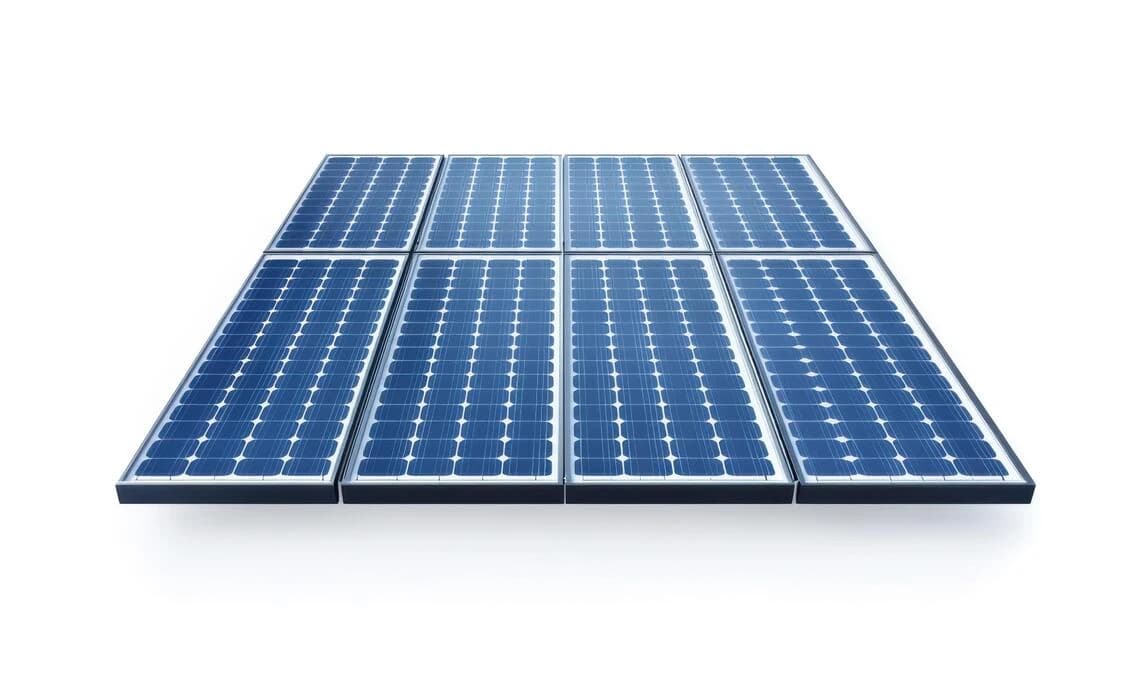
Bifacial Solar Panels on Bangladesh Factory Rooftops: Real-World Albedo Gain Analysis on Tin vs. Concrete vs. White Paint
In commercial and utility solar development, dual-glass bifacial photovoltaic modules have established market dominance over obsolete monofacial modules. By converting sunlight that strikes the front surface while simultaneously harvesting diffused and reflected ground irradiance through a transparent rear glass, bifacial modules deliver significantly more kilowatt-hours per installed watt-peak.
However, in Bangladesh's industrial sector—where over 70% of available commercial rooftops consist of corrugated galvanized iron (CGI) tin sheets or industrial steel sandwich panels—many system designers fail to optimize the critical factor determining rear-side yield: Surface Albedo Reflectance.
In this technical briefing, Noor Solar Energy presents empirical albedo coefficients, rear-side energy gain measurements, and optimal mounting geometry for industrial rooftops across Bangladesh.
Direct Answer (BLUF): How Much Extra Energy Do Bifacial Panels Generate on Bangladesh Factory Roofs?
Bottom Line Up Front (BLUF): On typical Bangladeshi industrial rooftops, authentic N-Type TOPCon bifacial modules (bifaciality factor ~80%–82%) generate between +8% to +24% extra electricity compared to monofacial panels of identical nameplate rating. On unpainted weathered corrugated tin roofs, rear-side gain averages +8% to +11%. On grey RCC concrete roofs, gain averages +10% to +13%. When roofs are coated with high-reflectance white elastomer waterproofing paint (albedo 0.65–0.72), bifacial gains jump to +20% to +24%, lowering the overall Levelized Cost of Electricity (LCOE) by up to 14%.
1. The Physics of Bifaciality: N-Type TOPCon vs. Legacy Mono PERC
A solar panel's ability to harvest rear-side sunlight is defined by its Bifaciality Factor (BF):
$$\text{Bifaciality Factor } (%) = \frac{\text{Rear-Side Rated Power } (P_{\text{rear}})}{\text{Front-Side Rated Power } (P_{\text{front}})} \times 100$$
- Legacy P-Type Mono PERC: Achieved bifaciality of only 65% to 70% due to heavy aluminum rear-surface field recombination losses.
- Modern N-Type TOPCon: Features symmetrical tunnel-oxide passivated contacts on both sides, elevating the bifaciality factor to 80% to 85%.
Because N-Type cells also eliminate Light-Induced Degradation (LID = 0%) and exhibit a lower temperature coefficient (-0.30%/°C versus -0.35%/°C for PERC), TOPCon modules harvest substantially more photons during hot tropical afternoons.
Compare our Tier-1 585W–620W N-Type TOPCon Dual-Glass Panels currently available in our wholesale inventory.
2. Empirical Albedo Benchmarks for Bangladesh Industrial Rooftops
Albedo ($\alpha$) measures the fraction of global solar irradiance reflected by a surface, ranging from 0.0 (total absorption) to 1.0 (perfect reflection). Below are measured albedo coefficients and resulting annual generation gains across common industrial rooftop substrates in Bangladesh:
| Rooftop Surface Type | Measured Surface Albedo ($\alpha$) | Rear-Side Irradiance Gain | Annual Energy Yield (kWh/kWp/year) | Recommended Installation Method |
|---|---|---|---|---|
| Aged / Weathered Corrugated Tin | 0.16 – 0.20 | +7.5% – +9.5% | 1,420 – 1,460 kWh | Elevated rail clamp (min 0.45m clearance) |
| New Galvalume / Bright CGI Sheet | 0.28 – 0.35 | +12.0% – +15.0% | 1,480 – 1,530 kWh | Direct trapezoidal clamp with tilt brackets |
| Standard Grey RCC Concrete Slab | 0.22 – 0.26 | +10.0% – +12.5% | 1,450 – 1,490 kWh | Ballasted HDG frame elevated 0.6m |
| White-Washed Concrete (Lime wash) | 0.45 – 0.52 | +16.0% – +18.5% | 1,540 – 1,580 kWh | High-reflectance seasonal application |
| Elastomeric White Roof Coating (Cool Roof) | 0.65 – 0.72 | +21.0% – +24.5% | 1,620 – 1,675 kWh | Highly recommended for maximum ROI |
Key Insight: Applying a commercial white reflective membrane or polyurethane coating to a concrete or tin roof costs roughly BDT 28 to BDT 35 per square foot, but increases 25-year plant revenue by hundreds of thousands of dollars through rear-side solar gain while reducing internal factory indoor heat by 4°C to 6°C.
3. Mounting Height and Tilt Geometry in Bangladesh (23.8°N Latitude)
To allow diffuse light to reach the underside of bifacial panels, racking geometry must adhere to strict aerodynamic and optical clearances:
Bifacial Illumination Geometry:
- Direct Solar Irradiance strikes the front face of the N-Type module.
- Elevation Clearance (0.5m to 0.8m above roof) allows diffuse and ground-reflected photons to illuminate the rear transparent glass.
- High-Albedo Roof Surface reflects ambient solar radiation directly into the underside cells.
- Height Above Roof Surface ($H$):
- If mounted flush against the tin roof ($H < 0.15\text{m}$), rear-side airflow and irradiance are choked, dropping bifacial gain below 2%.
- Optimal clearance is 0.50m to 0.80m, allowing reflected photons from a wide radius to strike the underside cells.
- Tilt Angle ($ heta$):
- At Bangladesh's average latitude (23.8°N in Dhaka), optimal annual energy capture for monofacial panels is 23°.
- However, for bifacial industrial systems on corrugated roofs, a 12° to 15° South tilt offers the superior compromise: maximizing aerodynamic wind stability during tropical cyclones while allowing excellent self-cleaning rainfall runoff and substantial rear illumination.
- Row Pitch (Inter-Row Spacing):
- To prevent the front row from casting an albedo shadow on the reflective surface behind it, row spacing must be at least 1.4 to 1.8 times the module height.
4. Dual-Glass vs. Transparent Backsheet: Durability in Bangladesh's Humid Monsoon
Bifacial panels are manufactured in two formats: Dual-Glass (2.0mm + 2.0mm tempered glass) or Transparent Plastic Backsheet. In Bangladesh, Dual-Glass is unequivocally mandatory for four structural reasons:
- Zero Moisture Ingress: Bangladesh experiences ambient relative humidity exceeding 90% during monsoon months. Plastic backsheets eventually permit water vapor permeation, leading to delamination and Potential Induced Degradation (PID). Glass-to-glass seals are 100% hermetic.
- Fire Safety Rating Class A: Dual-glass structures resist fire propagation far better than plastic backsheets, a non-negotiable compliance requirement for RMG factory insurance underwriters.
- Micro-Crack Resistance: Dual-glass modules position silicon solar cells in the neutral stress axis, preventing cell micro-cracking caused by strong cyclone gusts (wind loads up to 2,400 Pa).
- 30-Year Linear Warranty: Dual-glass TOPCon modules carry a 30-year performance guarantee promising ≥ 87.4% rated output at Year 30, compared to only 25 years for backsheet panels.
For technical deep dives on cell chemistry, read our analysis on TOPCon vs. PERC Solar Panels in Bangladesh.
5. Frequently Asked Questions (AEO / FAQ)
Q1: Does dust accumulation on the roof reduce bifacial solar gain?
Answer: Yes. Industrial soot and airborne silt common in Bangladesh reduce white roof albedo from 0.70 down to 0.40 over a 6-month dry period, cutting rear-side gain by roughly 30%. Therefore, when factory maintenance crews wash the front of the solar panels, they should simultaneously hose down the reflective roof area underneath.
Q2: What inverter DC/AC ratio should be used for bifacial installations?
Answer: For monofacial panels in Bangladesh, a DC-to-AC oversizing ratio of 1.20 to 1.25 is standard. For bifacial systems with an anticipated +15% rear gain, designers should size inverters with a DC/AC ratio between 1.10 and 1.15. Sizing inverters too small will result in thermal clipping during peak irradiance hours.
Q3: Are bifacial solar panels more expensive to import than monofacial panels?
Answer: In 2026, the wholesale manufacturing price gap between monofacial and bifacial modules has narrowed to less than BDT 1.00 to BDT 1.50 per watt. Given that bifacial panels generate 10% to 20% more lifetime kilowatt-hours, their levelized cost of energy (LCOE) is significantly lower.
Q4: Where can engineering firms buy authentic Tier-1 bifacial panels in Bangladesh?
Answer: Noor Solar Energy maintains an extensive inventory of authentic Tier-1 dual-glass N-Type TOPCon bifacial modules in container-scale consignments with full flash test reports and factory warranties.
Need custom PVsyst simulation files or shadow analysis for your factory's roof? Reach our solar engineering specialists via the Quotation Page.
Need Commercial Equipment for Your Project?
Get manufacturer-direct wholesale pricing, complete compliance documentation, and Dhaka warehouse delivery lead times.